This is an interview with the experimental and contemporay piano player and
composer Hauschka. His real name is Volker Bertelsmann and he is currently living
in Duesseldorf in the West of Germany. His music
is a playful exploration within the piano. Hauschka transfers the traditional
sound of the instrument into a mix of classic, modern and electronic melodies.
He uses paperclips and tape to pin the strings together in the acoustic body,
drops a chain into the instrument and lets tennis balls jump out of it while he
is pushing the piano keys. Rattles and bells are shaking vigorously and create an
electronic noise background. The combination of the traditional instrument and
its transformation is very interesting and makes the artist outstanding. His
music is unpredictable and fascinating at the same time.
The interview has been recorded after his concert in the Sugar Club in Dublin on May 20th 2012.
When was
the last time you put your hands into humid and lumpy mud? Today’s food
production in greenhouses might trick you, but carrots, potatoes and their
friends still like to sleep in the dark soil until they rise from their earthly
beds. Traditional fertilizers like manure, slurry or worms are now partially
replaced by superphosphates which have the side effect of accumulating soil
acidity.
In 1971
secretary Sue Coppard found that she was spending too much time in her office
and therefore went back to the roots of food production. She decided to help
out on the bio-dynamic farm at Emerson College in Sussexon her weekends. Inspired by the idea four of Sue’s friends joined
her shortly afterwards and Working
Weekends on Organic Farms, WWOOF, had its first members. The initiative to
pass on traditional knowledge about basic food production grew quickly and now
farmers and WWOOFers are participating in the movement in 99 different
countries around the world.
“The
whole idea is to go to somewhere to learn about organic growing and sustainable
living in exchange for accommodation and food and for giving help to the people
you are staying with. It’s really based on an exchange,” explains Annie King
who is the manager of WWOOF Ireland. The 58 year old has been a host and a
volunteer, a so called WWOOFer, for over 12 years.
Cats on the farm, Photo: Salomee Lacoste
In 1994 Annie moved from
England to Ireland and started working in Community Arts. She had a
smallholding and became a WWOOF host through WWOOF Independents. After a car
accident Annie was unable to continue with her work as an artist and couldn’t
take care of the farm all by herself.
“The WWOOFers I had saved my
life and my home,” says Annie. She was inspired by the people she met and recalls
the vast cultural exchange she had experienced.“My longest
WWOOFer stayed two and a half years and nearly became part of the family,” she
adds.As soon as she had recovered from her injuries
Annie travelled to New Zealand and volunteered on an organic farm. When she
returned to Ireland Annie helped restarting the organization and included
Northern Ireland on the host list.
The
first time Mutsuki Ito experienced WWOOFing was on a Japanese orchard farm. “It
was fabulous in the harvest season because you can eat peaches when you are
thirsty,” says the 21 year old. The Japanese student got involved with WWOOF
because he likes to be close to nature. In April he spent two weeks at a farm
in Co Donegal and was amazed by the landscape and the people around him.
Together with three other volunteers from France and The United States he
ploughed fields, planted vegetables and fed animals.
Mutsuki Ito, Photo: Salomee Lacoste
“In
general hosts are quite traditional. Having stayed with them under the same
roof I noticed many cultural differences,” comments Mutsuki on his WWOOF experience
in Ireland. The young Japanese who is studying Business in the Galway recalls conversations
he had with his host family and emphasizes how much he had learned through
that. “At first it seemed to be difficult to integrate into their culture but
after spending so much time with them I started to understand it more and more.
In that way I found a new part of myself,” adds the tall and dark haired student
from Tokyo. Volunteering
on organic farms is unpaid work. To make that clear the name of the
organisation was changed into Willing
Workers on Organic Farms because the term work caused problems with some
countries labour and immigration authorities. In the year 2000 another renaming
took place and the network was finally called WorldWide Opportunities on
Organic Farms. All of the hosts have to ad hear to the conditions of the organic growing principles of
WWOOF and present a sustainable lifestyle. Firstly,
it means that farmers should not use any kind of chemical or artificial
fertilizers in their food production.
A
WWOOFer in Ireland might end up in small holdings or gardens, dairy farms or
even centres for alternative healing. Therefore the tasks volunteers might face
range from planting, sowing, seeding, milking and harvesting. Furthermore,
alternative building techniques might be part of the farm training.
Farm view, Photo: Salomee Lacoste
The
minimum stay for volunteers is usually two weeks. Though, Annie King recommends
staying longer at one farm or to return to the place for another season. A €20
charge for a WWOOF membership allows the search for hosts and WWOOFers in both the
Republic and Northern Ireland. The organisation administers the network, has a
complaint procedure, helps to sort out visa inquiries, participates in
international conferences and tries to get additional funding for WWOOFing
projects.
“This time of the year we have hosts
looking for WWOOFers. I know in August it will be WWOOFers who are looking for
hosts. It tends to balance out,” says Annie. There are no restrictions on who
can be a volunteer in the organisation. Annie King remembers an American couple
who have were 84 and 79 years of age respectively when they send their request to
become WWOOFers. Even families with young children apply for farm stays. At the
moment there are about 2000 WWOOFers and 600 families and over
350 hosts subscribed to the network.
Annie
King confirms the number of volunteers and hosts has been increasing in recent
years. “There is a stronger interest in people growing their own vegetables and
having their own garden”, she states. “I think organic is recognised far more
widely as being a healthy alternative to eating mass produced food,” continues
Annie.
Mutsuki and other WWOOFers, Photo: Salomee Lacoste
The
network doesn’t want to be an exclusive experience only for people who are
travelling. “We are trying to encourage Irish people to WWOOF in their own
country,” says Annie. The organisation has visited the Dublin Institute of
Technology to encourage students to go engage with WWOOFing on the weekend or on
their holidays. The manager of WWOOF Ireland stresses the importance of
learning how domestic food is produced within the country. “It is not just
about travelling and going abroad really,” continued Annie. She is convinced
that the organisation has received more recognition in the last couple of years
and that the promotion of sustainable living and organic growing is increasing
world wide.
Mutsuki Ito
found WWOOFing a good way of meeting people and improving his language skills.
“My host didn’t have an internet connection so there was no choice but talking
with people,” says Mustuki with a bright smile; “Most importantly, I met a
French girl there.” His next stop for WWOOFing is going to be in Italy over the
summer before he goes back to Japan. He chose Italy because he loves pasta. “I
just want to try the real taste and learn how to cook it properly,” explains
Mutsuki. But maybe he will change his mind look for an organic farm in France.
WWOOF is everywhere.
Dog racing is still very popular in Ireland. This documentary looks at the enthusiastic side of betting, the art of breeding and what happens with the racers once they are too old to run any longer. Many of the old Greyhounds are brought abroad for re-homing. Pro Animale is an organisation that is based in Germany and Ireland what takes care of old or homeless animals. The documentary takes you to the Greyhound sanctuary Avalon in Woodford into the big farming house that is only occupied by jumping and barking dogs which are going to stay there until the end of their life.
The Galway Bay and the docks are the most beautiful sites of the Irish city on the West Coast. Tourists stream in as fast as the river Corribe. The busy season has just begun and that is good for the pubs and restaurants in the area; especially because it is hard to live of other industries during the recession.
Photo: Tanja Goldbecher
The Irish farming animals have a happy life running and jumping over fences on the green meadows.
"WHAT’S GOOD FOR THE GOOSE IS GOOD FOR THE GANDER."
Photo: Tanja Goldbecher
Galway is a good spot to stop for travelling musicians. They can play at night in many different pubs or busk on the city's busy Shop Street. Together with others they can play the never ending list of Irish tunes and some people are even making a living of it.This fiddler boy always plays on his own.
Photo: Tanja Goldbecher
Photo: Tanja Goldbecher
There is defenitely a lack of garbage bins in Galway city or the people are just aware of creating jobs for the cleaning staff.
Photo: Tanja Goldbecher
Photo: Tanja Goldbecher
"MARBH LE TEA AGUS MARBH GAN É."
"NÍ MAR A SHÍILTEAR A BHITEAR."
There are so many round things in our life. Look for yourself and you will find the beauty of the shape everywhere.
Photo: Tanja Goldbecher
Photo: Tanja Goldbecher
"AN RUD IS ANNAMH IS IONTACH."
The hat of Oscar Wilde who was one of the most popular Irish writer and poet.
Photo: Tanja Goldbecher
Photo: Tanja Goldbecher
Galway at night and in the middel of a serious fight.
Photo: Tanja Goldbecher
"COIMHÉAD FEARG FHEAR NA FIGHEDE"
"BRISEANN AN DÚCHAIS TRÍ SHÚILE AN CHAIT"
Photo: Tanja Goldbecher
Photo: Tanja Goldbecher
"IS BINN BÉAL INA THOST."
The most interesting things are hidden behind the windows. Just look for the ones with open curtains.
"I SCÁTH A CHÉILE A MHAIREEANN NA DAOINE."
Photo: Tanja Goldbecher
Do you recognise this fella?
Photo: Tanja Goldbecher
Photo: Tanja Goldbecher
Those green bikes are the most common ones you will see in the city. Keep your registration number in mind so you know which one is yours.157
Scandal and Bertie Ahern are a word and a person that are made for each other. Questions about his relationships with women, his political friendships and financial management kept the public attention span for years. Even the latest findings of the Mahon Tribunal didn’t deliver the expected clearing in the corruption claims of the former Taoiseach. Bertie repeats himself over again and states he hasn’t done anything wrong.
“I never took a corrupt payment from anyone and I told the truth to the Mahon tribunal about my finances and the difficult personal circumstances I found myself in,” stated the man whose hair turned white over the 40 years he has been active in Irish politics.
Born in Drumcondra, Dublin, September 12 in 1951 Bertie was one of five children Julia Ahern gave birth to. His father Con Ahern truly committed himself to the Republicans when the treaty was concluded. The family was frequently watched by the government and Con was put into jail several times. Bertie said himself that his father had a huge respect for the IRA leader Tom Barry and Con was the last prisoner to be released after the Civil War was officially over.
His mother Julia originated from a Republican family in Cork. The political bias Bertie grew up with can’t be hidden. His oldest brother Maurice became a middle distance athlete and stayed out of the political battlefield, as well as his sisters Kathleen and Eileen. He and his brother Noel took their father’s political interest over and engaged themselves in Fianna Fáil politics.
The Aherns belonged to the fortunate lower-middle-class families in the 50s and 60s and didn’t have to endure the curse of emigration like many people in Dublin had to. It was their ethos to concentrate on education even though the surrounding countryside of the farm didn’t create the optimal circumstances for that purpose. Still, they were just on the edge of the capital city.
“I did everything - milked the cows, fed the pigs, brought the will down from the college,” said Bertie recalling his childhood days. His introduction to the grassroots politics came when he campaigned as a poster boy in Dublin Central at the age of 14. Bertie was introduced to constituency work when he supported his teacher’s campaign running for Fianna Fáil.
The whole Ahern family supported Fianna Fáil without the slightest glimpse of a doubt. Party founder Eamon de Valera and later on successor Sean Lemass had a huge influence on Bertie’s political views. He started to become known in Ireland’s political landscape in the mid 60s and was elected to the Dáil in 1977. During that time Fianna Fáil was at the crossroads between the old and the new orientation of politics. Bertie spend his time in the Dáil library and studied Lemass’ speeches and legislation. Therefore Bertie’s time as Ireland’s Taoiseach mirrored Lemass’ standards. He adapted his political and economical pragmatism and aimed to create a growing market economy for increasing labour an investments.
Bertie Ahern had already joined the Federal Workers Union of Ireland in 1969 and became friends with many of the activists. He came into contact with Union leading members like Jim Larkin and John Foster. “It was great working with the unions. They’d bring me down to the Labour club on the Quays for a few pints,” said Bertie. He remained active in the movement well into the 70s but his work with the union could not inspire him to take a socials route in politics. “They knew I was Fianna Fáil and Republican and that I didn’t believe in that socialist stuff. I’ve never met a socialist in my life and if I do I’ll tell you,” he continued.
In 1994 Bertie was elected to be the sixth leader for Fianna Fáil. The Irish man was successful as a politician and became the country’s head of government in 1997. Eleven years later he resigned from that office.
“Given the fact that I served as Taoiseach for almost ten years, I can understand how an impression might have been created that a trawl of my finances and lifestyle should be at the heart of the inquiry. This, of course, is not the case,” commented the media experienced politician to the conclusions of the tribunal.
Bertie found love for the first time in his late teens. At the age of 24 he married the woman he had been going out with since then. Miriam Kelly became the mother of their two daughters Georgina and Cecilia. At that stage Julia gave up her workplace in the bank and supported Bertie’s full time devotion to his political career.
“It was no way to keep a marriage going. Like many marriages in politics and other walks of life, one partner got careless and that led to the collapse of the relationship,” said Tony Kett, Bertie’s right hand. In the deep end of the family crisis Celia Larkin who was a civil servant and Fianna Fáil activist appeared on the scene. Celia was part of Bertie’s company after work and a relationship between the two of them started to develop. Miriam became aware of that and gave her husband an ultimatum that he never met.
Looking back Bertie said he regrets the marriage collapsed because of his commitment to politics. Both of them went through a public separation in 1992 and the media rumours and speculations pressured the whole situation even more. The court proceedings revealed that they had been separated for a number of years and that Bertie’s fellow politicians in the Dáil had capitalised on the broken marriage in a tawdry fashion. The rumours about his private matters didn’t stop once it was known he was in a relationship with Celia. She worked for Bertie while he was the Taoiseach.
“Through all of this I was the father of two young children; in a new relationship; and maintaining long-standing friendships,” said Bertie sounding like the victim of the sensationalized media on the island.
Once his romantic relationships were clear the rumours around Bertie Ahern twisted to another subject. Loans, presents, donations, payments to his bank account and unnamed sources were enough for another scandal in the media. A few days ago the longest ongoing tribunal in Irish history finally stated that the former Taoiseach can’t be claimed for corruption but the question of his payment sources is still not disclosed. His reaction the rumour is unwavering - he denies everything.
“To my dying day, I will not accept the findings of the Mahon tribunal report,” stated Ahern in the Irish times and added; “I know that these findings in relation to me are wrong and inaccurate.”
Bertie Ahern wanted to be remembered for his political achievements. He wanted to be in the row of his idols De Valera and Lemass. Instead, he is going to be memorized for his resignation from his office as Taoiseach in 2008 and his party Fianna Fáil a few days ago because of his inability to clear his name in the corruption claims.
“My finances were chaotic, but they are most certainly not corrupt,” said Bertie. That is his explanation to the claims; neither a proof of guilt nor innocence. “I have tendered my resignation because I do not want a debate about me to become a source of division in Fianna Fáil,” he affirmed. In the end he tries to be heroic but actually he is backing out instead of speaking up. The tale of Bertie Ahern is just a story, the truth of his politics remains to be hidden in the Irish highlands.
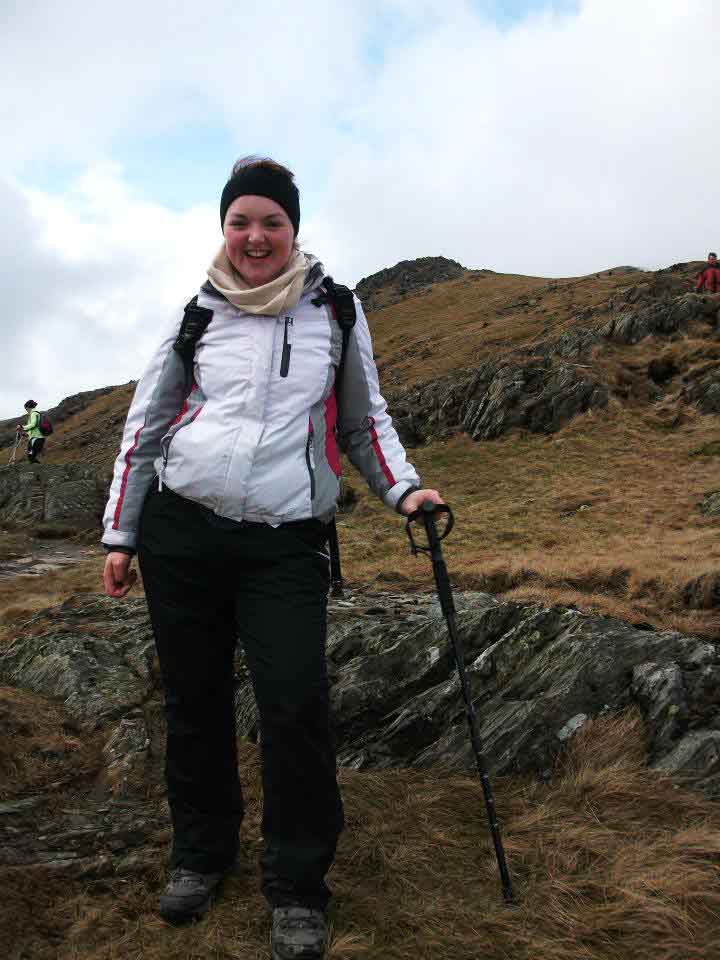
Orna takes a deep breath and looks back into the far distance of the rolling green landscape. Two more steps and she is there. At 1085 meters Orna Mulhern reaches the peak of the Snowdon mountain in Wales. Today is St. Patrick’s Day but the young Irish woman doesn’t care about that.
Orna on the hike, Photo: Orna Mulhern
This is the first time Orna has missed Ireland’s most important annual celebration. A three hour ride on the ferry brought her away from the island and now she is in the middle of Snowdonia National Park in Wales on a hiking trip with the mountaineering club of the National University in Galway. The Dubliner remembers the times in her childhood when she used to be excited about the parades in her hometown. Nowadays, St. Patrick’s Day has lost the importance to her and she believes visitors are more thrilled about the event than Irish people.
“The thing I don’t like about Paddy’s Day is the expectation that you have to get drunk or that it is promoted in that way,” says the 24 year old. “All the St. Paddy’s Day things are so gaudy, I don’t think that represents Ireland; it’s just a day off,” adds the girl with the shoulder length brown hair. Orna pulls up the zipper of her white waterproof jacket and smiles as she starts walking downhill.
Ireland’s national day has been successfully exported to the rest of the world. Each year the same pictures of green hats, green sunglasses, green wigs and all kinds of shamrock variations appear in papers of major cities from Dubai to South Africa or London. The biggest parade is not in Dublin but in New York and even the Berliner Fernsehturm is illuminated in green.
The American President Barack Obama cheers with a dark foamy Guinness to celebrate March 17 and many emigrants from the Island join him today. Taoiseach Enda Kenny is also touring in the United States during the celebrations. The day is a winner for the suffering Irish national budget. About 120,000 tourists are expected to arrive in Dublin for the wild and lively parade and they are estimated to donate over €40 million to the Irish economy.
Snowdonia National Park, Photo: Donn Morrision
“I think it is great that it is a tourist attraction and I hope they have a great time but a lot of what they see is teenagers getting drunk and I think that is embarrassing really,” explains Orna showing her dislike of the one day madness.
So, what is St. Patrick’s Day about? Is it to create the biggest touristic event of the year, to keep stereotypical images of the evergreen happy Irish way of living alive or to have an excuse for drinking more Guinness than usual?
According to the tradition the patron St. Patrick brought Christianity to the island. Since 1903 Saint Patrick's Day has become an official public holiday and the first parade was held in Dublin in 1931. The institutional St. Patrick’s Festival group set up with the aim to promote Irish culture in the world and to provide celebrations for people with an Irish heritage. In 2009 close to 1 million visitors took part in the five day festival and that is what the government would like to reach each year.
Back at the youth hostel, in the valley near the village of Beddgelert, Orna changes into a white dress adorned with flying birds and places herself on a brown leather couch. The cheeks of the young woman are slightly red and the look in her eyes is tired but confident.
“I didn’t make a note of leaving. Even though I think a lot of Irish people are happy to leave Ireland for the day,” says Orna. She joined the mountaineering club half a year ago and frequently attends their regular Sunday hike. “You feel alive when you are hiking,” she comments. Orna moved to Galway to do her degree in teaching of the Irish language. Her final semester in college is going to end very soon.
It is easy to find Orna anywhere in the hostel. Her laugh is remarkable in tone and duration. She giggles all day long and the people around her can’t help but join her. Orna believes St. Patrick’s Day should be a day when everyone is doing something special that he or she wouldn’t normally do. “I way prefer to spend my day at a mountain than at Eyre Square with a can in my hand,” she says.
Orna isn’t the only person who criticises the celebration of this day. “I'm not a big fan of St. Patrick's Day,” says Aengus Finnegan, the captain of the club. “It seems to me to be a celebration of the most banal aspects of Irish identity, with a focus on aspects of Irish culture which would only appeal to a person who engages with the country at a very shallow level, “ he continues but adds that he likes the community organised parades in small villages and towns.
The 27 year old is originally from Glassan in County Westmeath and is doing his Phd in Galway. “I don't like the anti-social behaviour, and the fact that many people see the day as an excuse to misbehave,” he criticises.
The Christian church frequently questions the secularisation of St Patrick's Day. As much as the festival tries to put the focus on marching bands, theatre performances and dance groups, excessive drinking in pubs remains to be the main attraction of the day.
Orna walking downhill, Photo: Tanja Goldbecher
When the sunset reddens the stony top of the surrounding mountains most of the club members are gathering in the cozy common room of the hostel. Open beer and wine bottles lighten the atmosphere. A tall woman walks in donning a green white and orange hat whilst swirling around a green glitter kilt; a female St. Patrick parading in Wales. A fiddle and a flute player are supporting the image with the traditional Irish tune “Inis Oirr”.
“It’s accepted that people spend the day in the pub,” says Orna while lifting her delicate eyebrows. She would like more local events and community based things to dominate the festivity. In her opinion St. Patrick’s Day just turned into a drinking event and nothing of the celebration represents anything that actually is Irish. “There is a difference between going out for a drink or going out to get really drunk,” she states. On this night in Wales no one is 'really' drunk but nearly everyone is drinking. Happy St. Patrick’s Day.